
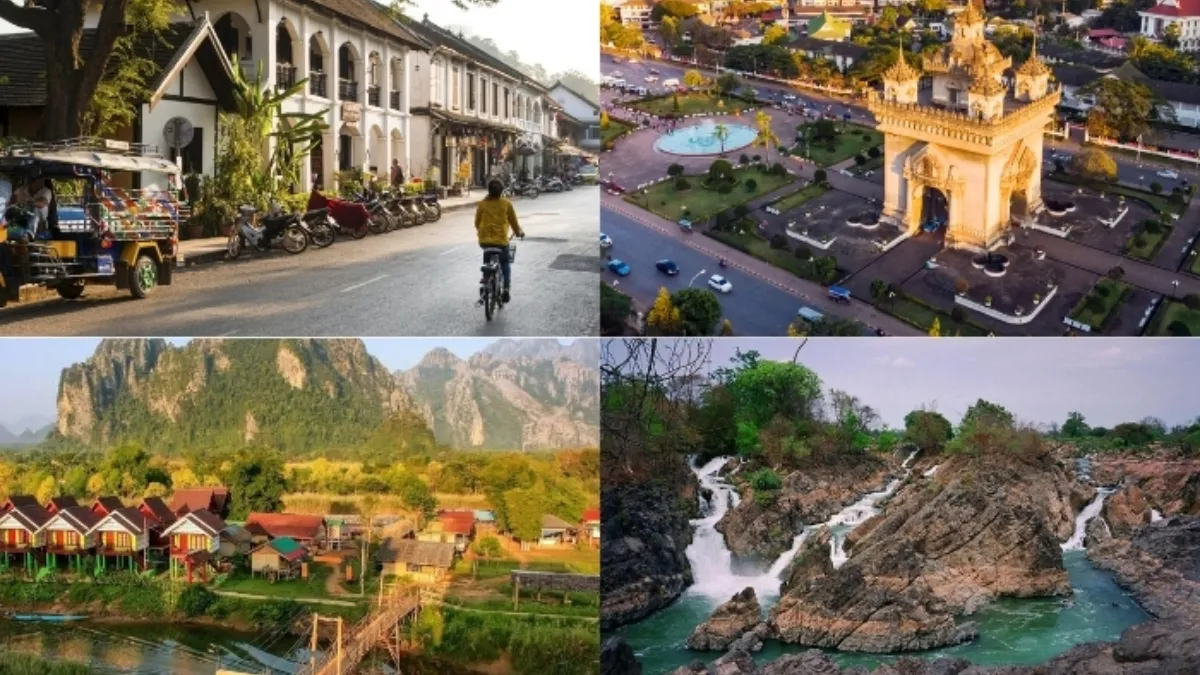
Top 10 Best Places to Visit in Laos You Shouldn’t Skip in 2026
At FlexTopics, we believe the best travel advice comes from people who’ve actually been there. I’ll be honest: I almost skipped Laos. After years of bouncing around Southeast Asia, I thought I’d seen it all the temples, the night markets, the turquoise waterfalls. But Laos has a way of slowing you down in the best possible sense, and after ten days riding the new bullet train from Vientiane to Luang Prabang, I’m convinced it’s the region’s most underrated destination.
If you’re searching for the best places to visit in Laos, you’re probably wondering: Is it worth it? How do I get around? What are the absolute must-sees versus the overhyped stops? Here’s the short answer: yes, it’s worth it especially now, as the Laos-China Railway has cut travel times dramatically and the country is finally getting the infrastructure it deserves.
The best place to visit in Laos depends on whether you crave culture, adventure, or pure stillness, but Luang Prabang remains the undisputed heart of the country, while Vang Vieng delivers the adrenaline, and the south offers a slower, river-soaked rhythm. Below, I’ve mapped out the 10 best places to visit in Laos for 2026, weaving in new openings, practical logistics, and the kind of honest impressions you only get from actually being there.
Why Laos and Why Now?
Laos welcomed 4.58 million international visitors in 2025 an 11% jump from the previous year and the first half of 2026 alone saw nearly 2.6 million arrivals, a 9.9% year-on-year increase. The word is out, but it still feels nothing like Thailand or Vietnam. The best places to visit in Laos reward travelers who embrace the journey: the Mekong River still functions as a highway, monks still collect alms in silence at dawn, and the French colonial architecture in Luang Prabang hasn’t been swallowed by glass towers.
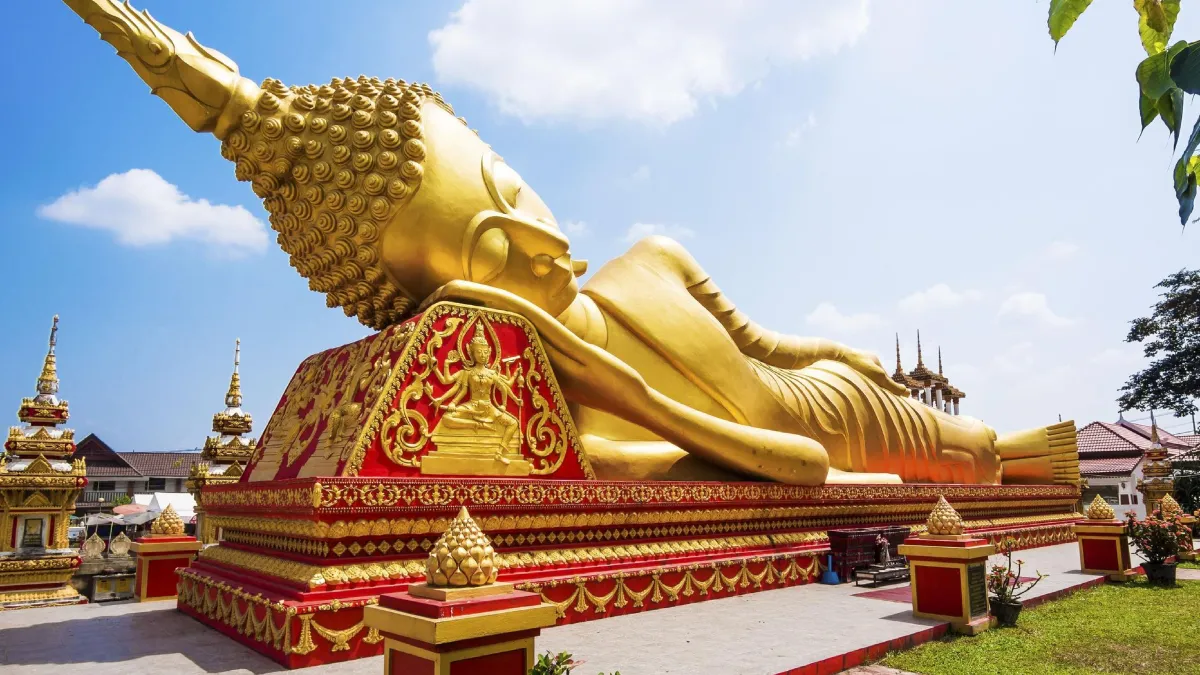
The new Boten-Vientiane Railway has been a game-changer, linking Vientiane, Vang Vieng, Luang Prabang, Oudomxay, and Boten in a single north-south corridor. A trip that once required white-knuckle bus rides now takes two hours between Vientiane and Luang Prabang, with cinematic views of limestone peaks and rice paddies the entire way.
The 10 Best Places to Visit in Laos (2026 Edition)
Luang Prabang: The Spiritual and Cultural Capital
If you only have time for one stop, make it Luang Prabang. This UNESCO World Heritage town sits at the confluence of the Mekong and Nam Khan rivers, and it’s the best place in Laos to visit if you want the country’s essence distilled into a few walkable streets. I woke before sunrise to watch the almsgiving ritual hundreds of saffron-robed monks walking silently as townspeople offer sticky rice and it remains the most profound travel moment I’ve had in years.
The town itself is a harmonious blend of traditional Lao wooden houses and faded French villas, with more than 30 temples scattered across the peninsula. Don’t miss Wat Xieng Thong, the Royal Palace Museum, and the night market, which is calmer and more refined than its counterparts elsewhere in Southeast Asia.
Just outside town, Kuang Si Falls is the poster child for Laos’ natural beauty: cascading turquoise pools tumbling over limestone formations, with a bear rescue center at the base. A tuk-tuk ride takes about 45 minutes each way, and the entrance fee goes toward conservation. For a deeper cultural dive, take a boat up the Mekong to the Pak Ou Caves, where thousands of Buddha statues sit tucked into limestone niches.
New in 2026: The Avani+ Lanexang Vientiane has launched “The Bohème Journey,” a six-day itinerary combining Vientiane, a five-night Mekong cruise, and a stay at Avani+ Luang Prabang an elegant way to connect the two cities without backtracking.
Vang Vieng: Adventure Capital with a New Skywalk
Vang Vieng has shed its backpacker-party reputation and emerged as Laos’ outdoor adventure hub. The landscape is otherworldly: dramatic limestone karsts rising from the Nam Song River, with caves, lagoons, and viewpoints packed into a compact area. I spent a morning kayaking past water buffalo and a afternoon cycling to Blue Lagoon 3 quieter and less crowded than Lagoon 1 and the whole day cost less than a nice dinner in Bangkok.
The big news for 2026 is the opening of Laos’ first glass bridge, a 228-metre structure suspended 128 metres above the valley floor in Huay Sangao village. Scheduled to open in October 2026, it will also feature a cliff elevator, a bungee-jumping platform, and access to Tham Nang Eua Cave. The Mokdom viewpoint and Kae Yeuang waterfall, which opened on a pilot basis in March 2026, sit just 7 kilometres from town and offer panoramic views from 1,470 metres above sea level a perfect escape from the valley heat. Hot-air balloon rides at sunrise remain the most magical way to see the karsts, and yes, they’re worth the splurge.
Vientiane: The Laid-Back Capital
Vientiane doesn’t try to impress you, and that’s precisely its charm. The best place to visit in Laos for a gentle introduction to Lao urban life, the capital blends Buddhist monuments with a sleepy Mekong promenade. Pha That Luang, the gilded national stupa, is the country’s most sacred religious site, while Wat Si Saket the only temple to survive the 1828 Siamese destruction houses thousands of Buddha images in its courtyard niches. Patuxai, Vientiane’s own Arc de Triomphe, offers sunset views over the city, and the Buddha Park (Xieng Khouang) just outside town is a surreal collection of Buddhist and Hindu sculptures.
I spent my last evening in Laos walking along the Mekong promenade, eating grilled fish from a street stall and watching aerobics classes unfold in Chao Anouvong Park. It’s not a city of blockbuster sights; it’s a city of small pleasures. The COPE Visitor Centre, which documents the legacy of unexploded ordnance in Laos, is essential viewing for understanding the country’s modern history.
Nong Khiaw and Muang Ngoi: The North’s Dramatic River Valleys
If Luang Prabang is about culture, Nong Khiaw is about raw nature. This small town on the Nam Ou River is surrounded by massive, vertical limestone cliffs, and the Pha Daeng Peak viewpoint a steep 1–1.5 hour climb rewards you with 360-degree views that rival anything in Vietnam’s Ha Giang or Thailand’s Krabi. I took a boat upstream to Muang Ngoi, a village with no cars and barely any electricity, and spent two days hiking to hill-tribe villages and swimming in the river. It’s the kind of place where time dilates and you stop checking your phone.
The broader Northern Hills region, stretching toward Oudomxay and Luang Namtha, is where you’ll find some of the country’s most authentic trekking. The Nam Ha National Protected Area, near Luang Namtha, spans roughly 2,230 square kilometres and is home to over 300 bird species and 37 mammal species. Community-based trekking here directly supports villages, and the Nam Et-Phou Louey National Park which spans Houaphanh, Luang Prabang, and Xiangkhouang provinces offers night safaris and wildlife-spotting boat trips that fund conservation efforts.
Si Phan Don (4,000 Islands): The Art of Doing Nothing
Down south, the Mekong widens into a labyrinth of islands, and life slows to a crawl. Si Phan Don literally “4,000 Islands” is the best place to visit in Laos if your goal is to decompress. I rented a bicycle on Don Khone, pedaled past rice fields and water buffalo, and watched the sun sink into the Mekong with a Beerlao in hand. If you’re lucky, you might spot the rare Irrawaddy dolphins that still swim in these waters. The Li Phi Falls (Tad Somphamit) and the Khone Phapheng Falls the largest by volume in Southeast Asia are worth a half-day excursion. There’s not much to “do” here, and that’s exactly the point.
Bolaven Plateau and the Thakhek Loop: Waterfalls and Coffee Country
The Bolaven Plateau, reachable from Pakse, is a cooler, greener world of coffee plantations, waterfalls, and ethnic minority villages. The classic loop driving or riding a motorbike through the plateau takes two to three days and passes Tad Fane, a 120-metre twin waterfall plunging into a forested gorge, as well as Tad Lo and dozens of smaller cascades. I’m not a coffee drinker, but the smell of roasting beans in the morning air almost converted me.
Further north, the Thakhek Loop is a 450-kilometre karst-country circuit that has become a rite of passage for adventurous travelers. The highlight is Kong Lor Cave, a 7-kilometre underground river that you navigate by motorized longboat in near-total darkness an experience that feels like entering the earth’s core.
Wat Phu and Champasak: The Khmer Imprint
Wat Phu, a ruined Khmer temple complex at the base of a sacred mountain, predates Angkor Wat and offers a quieter, more atmospheric alternative to Cambodia’s famous temples. The site is a UNESCO World Heritage Site, and the surrounding Champasak province is dotted with rice paddies and Mekong riverbanks perfect for slow exploration. I visited in the late afternoon, when the sandstone carvings glowed orange and almost no one else was there.
Luang Namtha: Trekking and Ethnic Diversity
Luang Namtha, in the far north near the Chinese border, is the best place in Laos to visit for serious trekkers. The province is home to more than 20 ethnic groups including Akha, Khmu, Yao, and Lanten communities and the Nam Ha National Protected Area offers guided hikes that combine jungle trekking with homestays in traditional villages. The night market in Luang Namtha town is a low-key affair where you can sample dishes from different ethnic traditions, and the surrounding countryside is laced with waterfalls and caves.
Bokeo and the Gibbon Experience: Canopy Adventure
For a completely different kind of Laos experience, head to Bokeo Nature Reserve, where the Gibbon Experience combines forest hiking, canopy ziplining, and treehouse accommodation in one of the country’s most innovative conservation tourism projects. You sleep suspended in the jungle canopy, wake to the calls of gibbons (if you’re lucky), and your fees directly support forest protection and local employment. It’s not cheap, but it’s unforgettable.
Khammouane: Caves, Fossils, and the New “Hidden Hands” Cave
Khammouane Province is having a moment. In June 2026, the Tham Pha Mue “Hidden Hands” cave officially opened to visitors after years of research revealed more than 280 prehistoric rock paintings, including handprints and geometric patterns, dating back thousands of years. The cave joins a growing list of attractions in the province, including the Kong Lor Cave and the newly opened Khun Kong Leng eco-tourism site, which spans 80 hectares and includes more than 20 caves and fossils believed to be over 500 million years old. It’s a glimpse of a side of Laos that few travelers have seen, and it’s evolving fast.
Practical Tips for Visiting Laos in 2026
Getting around: The Laos-China Railway is the most efficient way to travel between Vientiane, Vang Vieng, and Luang Prabang, but ticket booking can be tricky. You can only book up to three days in advance in person at the station (bring your passport and cash), or use agents like 12Go, Viator, or Baolau. For the south, buses and minivans are the norm, and the Thakhek Loop requires a motorbike.
When to go: November to February offers cool, dry weather the ideal window for exploring the best places to visit in Laos. April brings Pi Mai, the Lao New Year, a joyful water-soaked festival. Avoid March to May if you’re sensitive to heat and smoky haze from slash-and-burn agriculture.
Responsible travel: Laos is still recovering from the legacy of unexploded ordnance, and the COPE Visitor Centre in Vientiane is an important stop to understand this history. Choose elephant experiences that prioritize animal welfare MandaLao Elephant Conservation near Luang Prabang is a leader, offering trekking beside former logging elephants without riding.
Final Thoughts: The Best Place to Visit in Laos Is the One You Slow Down For
After ten days, I realized the 10 best places to visit in Laos aren’t a checklist they’re a rhythm. Luang Prabang gave me awe, Vang Vieng gave me adrenaline, and the 4,000 Islands gave me permission to do absolutely nothing.
The best place in Laos to visit will depend on whether you’re chasing temples, treetops, or tranquility, but the common thread is a country that hasn’t lost its soul to tourism. The bullet train has made it easier than ever to move north to south, but the real magic happens when you stop moving and let Laos unfold at its own pace. Go before the rest of the world catches on.


