Top 20+ Best Places to Visit in Saudi Arabia by Region in 2026
Most first-timers land in Saudi Arabia with two names in mind AlUla and Riyadh and leave without realizing they have skipped the country’s most surprising half. The Kingdom is roughly the size of Western Europe, it only began issuing tourist visas in 2019, and its 2026 tourism calendar now stretches from rose farms in the western highlands to coral walls in the Red Sea and 300-metre cliffs outside the capital. The best places to visit in Saudi Arabia are not a short list. They are a set of regions, each with its own climate, rhythm, and reason to go. This FlexTopics guide maps them out clearly, with the specific places worth your time in each.
The Quick Answers Before You Book
Before you start mapping the best places to visit in Saudi Arabia, it helps to settle the logistics that trip up most first-timers. Most eligible nationalities can apply for the tourist eVisa online, valid for one year with stays of up to 90 days. The base fee is 300 SAR, though the total with insurance and service charges typically lands closer to 379 SAR. The best window for travel is November to March, when daytime temperatures in Riyadh and the desert sit around 20–28°C. A realistic mid-range budget is $100–$180 per day excluding international flights. Alcohol is illegal everywhere, including luxury resorts.
AlUla and the Northwest, Where Ancient Stone Does the Talking
AlUla and the northwest sit at the top of nearly every credible list of the best places to visit in Saudi Arabia. The region packs 7,000 years of civilisation into a single valley, and its tourism model is deliberately capped to avoid the crowds that have swallowed Petra.
Hegra (Madain Salih)
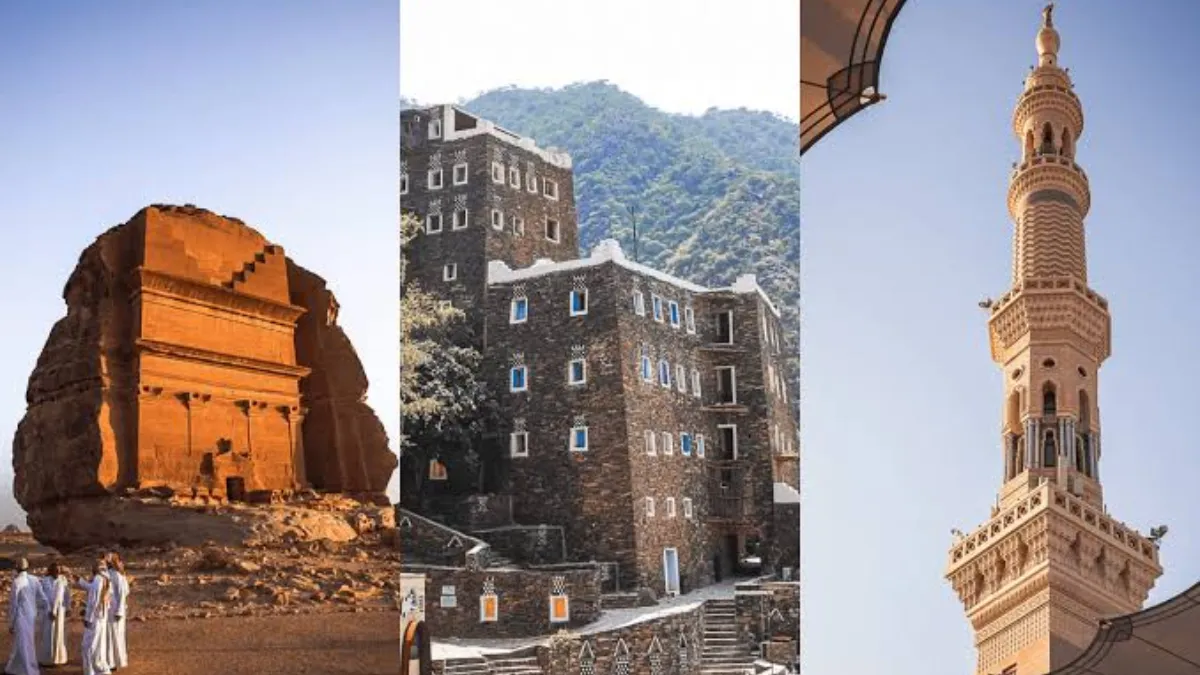
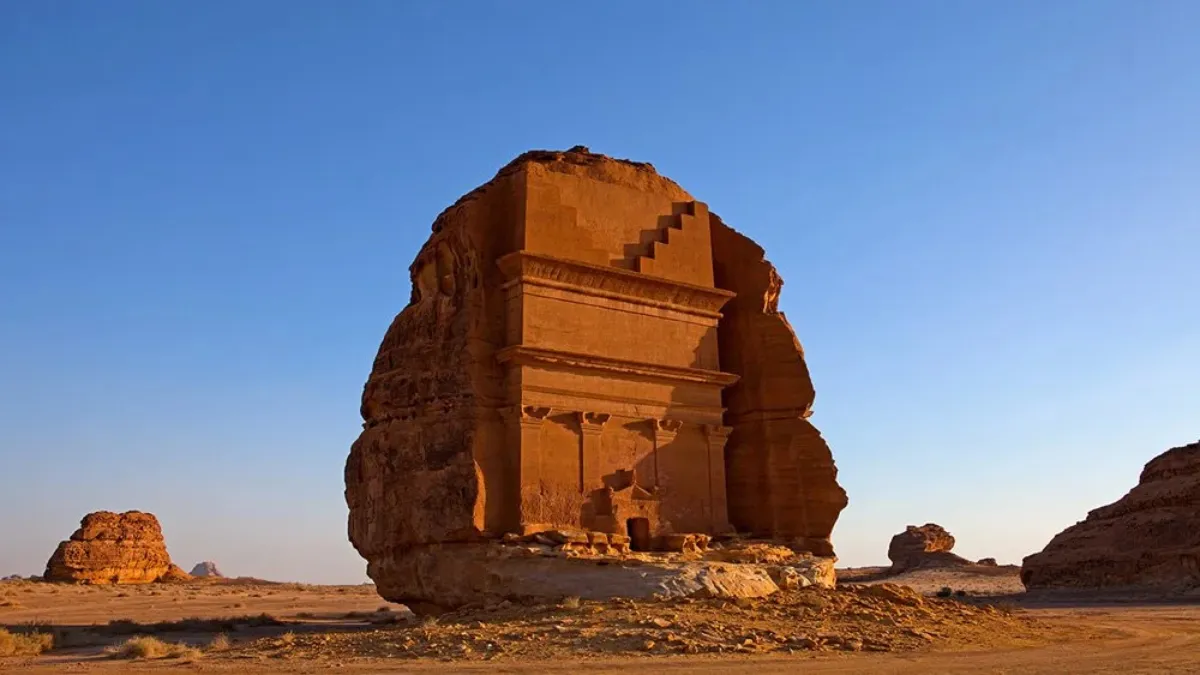
Saudi Arabia’s first UNESCO World Heritage Site holds more than 100 monumental Nabataean tombs carved into rose-hued sandstone, including the 23-metre free-standing monolith known as Qasr Al Farid. It remains one of the best places to visit in Saudi Arabia for anyone drawn to ancient history. Access is by organized tour, and peak-season slots fill early; book through Experience AlUla well in advance. Self-driving is not permitted inside the site, and visitors choose between a coach tour (from 95 SAR) or a more flexible hop-on-hop-off vintage Land Rover option (around 150 SAR), both available in Arabic and English.
Elephant Rock (Jabal AlFil)
A 52-metre sandstone formation eroded into an elephant silhouette, with a cluster of cafés at its base. For sheer spectacle at golden hour, it is one of the best places to visit in Saudi Arabia, and it costs nothing. The site sits about 15 minutes by car from AlUla’s centre and typically opens around 4 p.m.; arrive 45 minutes before sunset and stay into the evening, when the rock turns a deep orange and the desert air finally cools.
Maraya Concert Hall
The largest mirrored building in the world, designed to reflect the surrounding valley rather than interrupt it. Even without a show, the exterior is worth the drive. The venue is an active performance space rather than a static monument in January 2026 it hosted the “Marvels of Saudi Orchestra” with 107 musicians, and its calendar of concerts and cultural events continues through the year.
AlUla Old Town
A labyrinth of more than 900 mud-brick properties, now converted into cafés, artisan shops, and intimate cultural spaces. For atmosphere after dark, it is among the best places to visit in Saudi Arabia, and it is at its best once the day tours have moved on. Shops typically begin opening after 4 p.m., and the open-air cafés around Tantora Plaza and AlUla Fort fill with locals and visitors for dates, cardamom coffee, and handmade ceramics.
Riyadh and Diriyah, Where Heritage Meets Momentum
Riyadh and Diriyah rank among the best places to visit in Saudi Arabia for travelers who want to watch a capital rebuild itself in real time. The city is not pretty in the traditional sense, but it is the most interesting place in the Gulf right now.
Diriyah and At-Turaif
The UNESCO-listed birthplace of the Saudi state is a fusion of mud-brick heritage architecture and new cultural infrastructure. Diriyah sits high on any list of the best places to visit in Saudi Arabia for heritage and dining in the same evening. The Diriyah Contemporary Art Biennale anchors the calendar, and a wave of hotel openings including Aman and Oberoi properties arrives in and around the district in 2026. Bujairi Terrace, the 15,000-square-metre dining district overlooking the illuminated At-Turaif, removed its day-pass requirement in May 2026 and now offers complimentary access through the end of September, making an evening meal with a view of the historic valley easier than ever to plan.
Edge of the World (Jebel Fihrayn)
A sheer 300-metre escarpment about 90–100 kilometres northwest of the city, where the Tuwaiq cliffs drop away to the flat gravel plains of an ancient seabed. The drive is rough, so go with a guide, and bring more water than you think you need. Most operators run 5–7 hour 4×4 tours from Riyadh that include the cliff edge, the Red Sand Dunes, and a stop at the Bat Cave, with sunset and a desert dinner often built into the itinerary.
Kingdom Centre Sky Bridge
The observation deck atop Riyadh’s most recognizable tower offers the clearest view of the city’s scale. It pairs naturally with a walk through the adjacent mall and a coffee at one of the surrounding cafés. The glass-walled bridge sits on the 99th floor, roughly 300 metres above ground, with adult tickets at 138 SAR and children’s tickets at 69 SAR; sunset is the busiest slot, so booking online in advance saves queuing.
Souq Al Zal
The capital’s most atmospheric traditional market, where you can browse carpets, antiques, and Bedouin crafts before or after a Diriyah visit. It is the kind of stop that grounds a city otherwise dominated by glass and highways. The market spans 38,000 square metres near Al-Hokm Palace and Masmak Fortress, with shops selling bisht cloaks, shemagh scarves, oud perfume, saffron, and handmade metalwork most open from mid-morning until around 10 p.m.
Jeddah and the Red Sea, Where the Country Exhales
Jeddah and the Red Sea coast hold some of the best places to visit in Saudi Arabia for travelers who want atmosphere over monuments. The coastline, meanwhile, has moved from render to reality faster than almost anywhere else on earth.
Al-Balad (Historic Jeddah)
A UNESCO-listed maze of coral-stone houses with carved wooden balconies, spice souks, and alleyways that smell of sea salt and cardamom. Al-Balad remains one of the best places to visit in Saudi Arabia for atmosphere over monuments. Walk it without a map and let yourself get lost. The district rewards slow exploration Nassif House Museum, the Al Alawi Souq spice stalls, Bab Makkah gate, and the teamLab Borderless museum are all within walking distance, and the oldest café in Al-Balad, Diab Coffee, is a natural mid-walk pause.
Shura Island
The heart of the Red Sea destination now has a functioning luxury cluster. Shura has quickly become one of the best places to visit in Saudi Arabia for travelers who want a resort trip with a conservation story attached. Four Seasons Resort and Residences opened on 20 May 2026, joining SLS, EDITION, and the 430-key Grand Hyatt that opened in November 2026. The island also has Saudi’s first island golf course, Shura Links, and the Red Sea currently has 11 hotels open, with six more resorts scheduled to come online on Shura in the months ahead.
ADRENA
Red Sea Global’s adventure district opened to the public in March 2026 with a 215-metre saltwater surf pool, a wakeboarding lake, a skatepark, and an overwater zip line. It is the best place to go in Saudi Arabia if your ideal coastline involves adrenaline rather than a sun lounger. The district runs up to 24 outdoor sports and adventure activities, including cliff diving, a six-metre-deep diving pool, snorkel trails, a BMX pump track, and a 10-metre slip-and-fly slide, with day and night operating hours.
Farasan Islands
An archipelago off the southern Red Sea coast, distinguished by mangrove forests and the rare Farasan gazelle. It remains one of the country’s most under-visited natural environments and a draw for divers and wildlife watchers. The marine ecosystem supports more than 230 fish species, green and hawksbill turtles, dugongs, and occasional whale and shark sightings, while the offshore Farasan Banks hold some of the Red Sea’s densest coral coverage best dived from December to May.
The Mountain Highlands, Where Saudis Go to Cool Down
The western highlands contain several of the best places to visit in Saudi Arabia that international guides still skip, yet they are where domestic travelers head every summer. The 2026 Saudi Summer campaign is built around exactly these regions, alongside the Red Sea and Jeddah.
Abha and Aseer
Abha sits above 2,200 metres in the Sarawat Mountains, surrounded by juniper forests, terraced villages, and cable-car routes. The wider Aseer region has announced a 2026 target of more than 3 million visitors and a programme of over 100 events and experiences. The Al-Habala cable car descends roughly 300 metres from the mountaintop to the historic village, offering views of cliffs and green valleys, while the newer Abha cable car stretches nearly 4 kilometres over the dam lake with 22 cabins.
Soudah
A high-altitude area within the Aseer landscape, known for hiking trails, mountain viewpoints, and organised excursions with local guides. It is the best place in Saudi Arabia to visit if you want cool air and forest scenery without leaving the country. Guided routes range from a 3-kilometre loop to a 7-kilometre one-way trek, and the longer option follows a 250-year-old mountain trail down through juniper forest to the valley below.
Taif
The Kingdom’s rose capital, with more than 70 specialised factories processing its famous Damask roses. The Taif Rose Festival returns in spring 2026, and the Al Hada cable car connects the summit to Al-Kar Tourist Village with panoramic views across the Sarawat range. The cable car drops about 600 metres over a 4.5-kilometre route and takes 15–20 minutes each way; rose season peaks from March to May, when the terraced farms below the city are in full bloom.
Al-Baha
A greener, quieter highland region built around forests, valleys, and historic stone villages. For Summer 2026, Al-Baha announced more than 60 events and a target of over 2.5 million visitors, making it an increasingly viable alternative to the busier mountain hubs. The season includes the ninth Al-Atawlah Heritage Festival, the second Raghadan Market festival, an 18th International Honey Festival in late July, and a 370-kilometre cycling tour through the region’s governorates.
The Eastern Province, Where Oases Meet the Gulf
The Eastern Province holds some of the best places to visit in Saudi Arabia that first-timers routinely miss, which is exactly why it rewards travelers who have already seen the headline acts.
Al-Ahsa Oasis
A UNESCO-listed oasis covering more than 85 square kilometres, with millions of palm trees and natural springs. The best window is October to March, when temperatures drop to a comfortable 18–25°C. Nakheel Village has become the oasis’s most visitor-friendly entry point, with date markets, agricultural displays, and family-oriented programming that explains why Al-Ahsa remains the world’s largest palm oasis, with more than 2.5 million date palms.
Al-Qarah Mountain
A dramatic limestone formation near Al-Ahsa with narrow, naturally air-conditioned crevices that stay cool even in summer. It pairs naturally with the oasis and the old souqs for a full heritage day. The mountain’s cave network stretches over 1.5 kilometres and includes 28 narrow, towering caverns formed by water erosion and seismic activity, with a small entrance fee covering both the caves and the on-site museum.
Tarout Island and Qatif
Connected to Qatif by a causeway, Tarout Island holds one of the oldest continuously inhabited settlements in the region. The surrounding Qatif waterfront and its quiet corniche make it a slow, uncrowded half-day. Archaeological evidence suggests the island has been inhabited for more than 5,000 years, and it served as a major Dilmun trading port for pearls, musk, and perfumes long before the modern causeways were built.
Ithra (King Abdulaziz Center for World Culture)
A world-class cultural centre in Dhahran with a museum, cinema, library, and rotating exhibitions. It is the best place in Saudi Arabia to visit if you want contemporary Gulf culture in a single building. The centre runs a year-round programme of exhibitions, design challenges, and youth programmes its Ithra Winter 2026 season includes events at the main Dhahran campus and the Dhahran Expo in Al-Khobar, so checking the calendar before you go is worth the effort.
The Deserts, Where the Country Shows Its Scale
Saudi Arabia contains three distinct sand seas, and the deserts are among the best places to visit in Saudi Arabia for anyone who wants to understand the country’s true scale.
The Empty Quarter (Rub al Khali)
The largest contiguous sand desert on the planet, spanning roughly 650,000 square kilometres. Multi-day expeditions launch from Sharurah in the south, with dunes rising above 250 metres and silence so absolute you can hear your own heartbeat. Sharurah has also become a winter tourism hub in its own right, hosting the Sharurah Winter Festival with camel and horse racing, falconry competitions, traditional markets, and desert car rallies, making the gateway town a destination rather than just a launch point.
Red Sands (Al Nafud)
The accessible dune field near Riyadh, ideal for half-day dune bashing, sandboarding, and camel rides. It is the best place to go in Saudi Arabia if you want a desert experience without committing to a multi-day expedition. The red-orange dunes sit about 60–80 kilometres southwest of the city in the Dirab area, and most half-day tours combine 4×4 dune bashing, quad biking, sandboarding, and a Bedouin-style camp dinner with Arabic coffee and a bonfire.
Practical Notes for 2026
Dress modestly, but do not overthink it. The abaya is not required for foreign women, and headscarves are optional outside mosques; covered shoulders and knees is the practical rule. Book AlUla and Red Sea resorts well ahead, especially in the November–February window. Check your government’s travel advice for southern regions before booking Aseer itineraries. And plan your region rather than your checklist Saudi Arabia rewards depth over speed.
The Best Place in Saudi Arabia to Visit Depends on Which Country You Want to See
The best places to visit in Saudi Arabia are not competing for the same traveler. AlUla gives you ancient stillness. Riyadh gives you momentum. Jeddah and the Red Sea give you coastline and soul. The highlands give you cool air and rose farms. The Eastern Province gives you an oasis the size of a city. Pick one region, give it real time, and let the country surprise you because in a place this large, the only mistake is trying to see it all at once.